Navigating the Storm: Why Proactive Portfolio Rebalancing Is Your Most Important Move Right Now
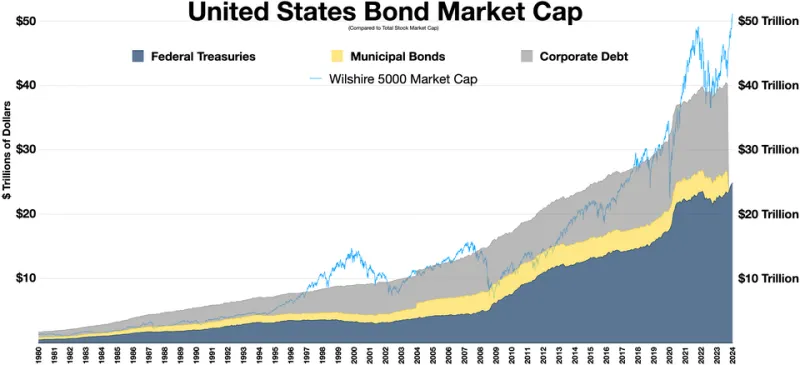
Photo: Wikideas1, CC0, via Wikimedia Commons
Market volatility has a peculiar effect on investor psychology. When conditions are calm, portfolio maintenance feels optional—something to address at the next quarterly review. When turbulence arrives, the instinct is often paralysis: a reluctance to make changes while the landscape remains unsettled. Both tendencies, though entirely understandable, can be financially costly. The investors who tend to fare best across full market cycles are those who treat rebalancing not as a reaction to volatility, but as a disciplined, ongoing practice that becomes especially valuable during periods of disruption.
2024 has delivered no shortage of disruption. The Federal Reserve's extended high-rate environment, persistent inflationary pressures in select categories, an evolving geopolitical landscape, and dramatic divergence in equity sector performance have collectively produced a market that looks quite different today than it did eighteen months ago. For many investors, that means their current portfolio allocations look quite different from their intended ones—and that gap carries real risk.
Why Drift Is a Bigger Problem Than Most Investors Realize
Every portfolio begins with an intended allocation—a deliberate balance of equities, fixed income, alternatives, and cash designed to match an investor's risk tolerance, time horizon, and financial objectives. Over time, however, asset classes perform differently, and that initial balance shifts. A portfolio that began 2023 with a 60/40 equity-to-bond allocation may now sit considerably closer to 70/30 following strong equity performance, particularly in large-cap technology names.
On the surface, this drift may appear benign or even beneficial—after all, rising equity values are generally welcome. But a portfolio that has drifted meaningfully from its target allocation is now carrying a risk profile that was never explicitly chosen. If equity markets experience a significant correction—and corrections are a normal feature of long-term investing, not an aberration—a portfolio that has drifted upward in equity exposure will feel that correction more acutely than one that was deliberately maintained.
Year-end is a natural inflection point for addressing this drift. The combination of portfolio review, tax-loss harvesting opportunities, and forward-looking strategy adjustments makes the final quarter an ideal window for tactical rebalancing.
The 2024 Market Landscape: Specific Pressures Demanding Specific Responses
The case for rebalancing is always present in principle, but current market conditions make it particularly compelling in practice. Several specific dynamics deserve attention.
Concentration risk in mega-cap technology: The extraordinary performance of a small number of large-cap technology and AI-adjacent companies has driven significant index-level returns, but it has also created substantial concentration in portfolios with heavy index exposure. Investors who hold broad market index funds may be more exposed to a handful of individual companies than they realize. Understanding that underlying concentration—and deciding deliberately whether to maintain or reduce it—is an important act of portfolio stewardship.
Fixed income recalibration: The rate environment of the past two years has created both challenges and opportunities in fixed income. Investors who locked into longer-duration bonds before the Fed's rate-hiking cycle may be sitting on unrealized losses. Conversely, current yield levels in short- and intermediate-duration investment-grade bonds represent the most attractive income opportunity in over a decade. Reviewing fixed income positioning with fresh eyes is worthwhile for nearly every investor.
Alternative investments as a stabilizing force: Real assets, private credit, infrastructure, and certain hedge fund strategies have demonstrated relatively low correlation to public equity markets during periods of volatility. For high-net-worth investors with the appropriate liquidity profile and investment horizon, increasing allocation to alternatives can meaningfully improve portfolio resilience. This is not a new idea, but the current environment makes the case more compelling than it has been in years.
The Mechanics of Tactical Rebalancing
Rebalancing can be executed through several mechanisms, and the optimal approach depends on an investor's tax situation, cash flow needs, and the specific nature of the drift in their portfolio.
Tax-loss harvesting: Year-end provides an opportunity to realize losses in underperforming positions, which can offset capital gains elsewhere in the portfolio. This strategy requires careful attention to the IRS wash-sale rule, which disallows a loss deduction if the same or substantially identical security is repurchased within 30 days before or after the sale. A qualified tax advisor should be involved in any meaningful harvesting strategy.
Rebalancing through new contributions: For investors who are still in an accumulation phase, directing new contributions toward underweight asset classes is often the most tax-efficient rebalancing method, as it avoids triggering taxable events in existing positions.
Strategic asset location review: Beyond the allocation question, where assets are held matters considerably. Tax-inefficient assets—such as high-yield bonds, REITs, and actively managed funds with high turnover—are generally better suited to tax-advantaged accounts. Reviewing asset location as part of a broader rebalancing exercise can improve after-tax returns without altering the overall risk profile.
The Psychological Dimension: Why Discipline Is a Competitive Advantage
Behavioral finance research has consistently demonstrated that investor psychology is among the most significant determinants of long-term outcomes—often more impactful than the specific securities selected. Volatility triggers emotional responses that are deeply human and entirely counterproductive: the urge to sell during drawdowns, the reluctance to buy after prices have fallen, the temptation to chase recent outperformers.
A disciplined rebalancing framework serves as a structural counterweight to these impulses. When you have a written investment policy statement and a defined rebalancing trigger—whether calendar-based, threshold-based, or both—the decision to act is already made. You are not reacting to fear or greed; you are executing a plan.
This is one of the most tangible ways that working with a skilled advisor adds value. Not by predicting market direction—no one does that reliably—but by providing the structure, accountability, and behavioral coaching that keeps investors aligned with their long-term strategy when short-term conditions make that alignment feel uncomfortable.
Taking Action Before Year-End
The window for meaningful portfolio action before December 31 is finite. Tax-loss harvesting, Roth conversion decisions, charitable giving strategies, and rebalancing trades all require time to execute thoughtfully. Investors who begin this process in October or November have considerably more flexibility than those who wait until mid-December.
At Sterling Wealth Advisors, we are currently conducting comprehensive portfolio reviews for our clients to assess drift, identify tax opportunities, and stress-test allocations against a range of market scenarios. If your portfolio has not received this level of attention recently, the current environment makes now an especially appropriate time to begin.